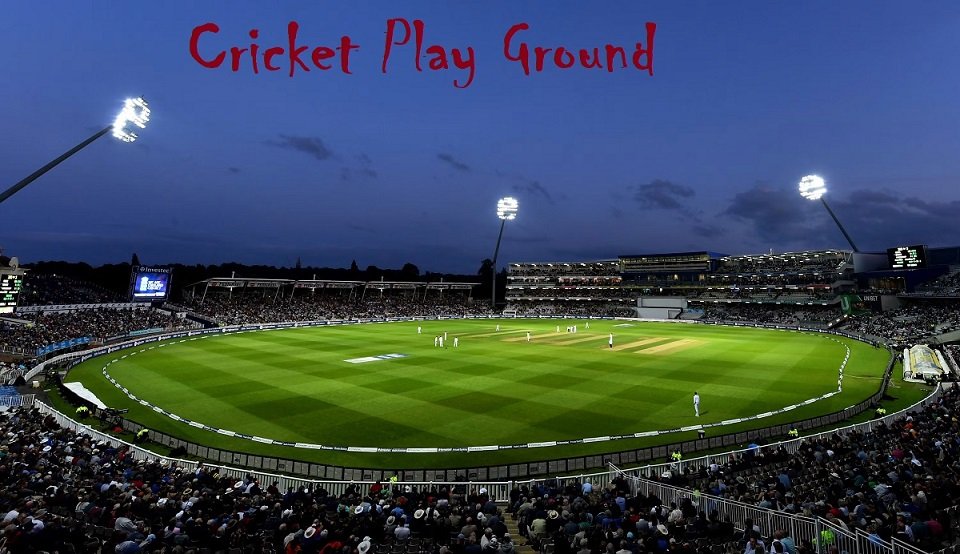
Cricket Playground
Cricket is one of the most popular sports in the world, played by means of tens of millions of people in countries like India, Australia, England, Pakistan, South Africa, New Zealand, Bangladesh, Sri Lanka, and plenty of others. Whether it’s a Test match, an IPL recreation, or a local event, each match is played on a specifically organized cricket play ground.
A cricket playing field is lots more than just a large area. It includes a carefully prepared pitch, boundary lines, exercise centers, drainage structures, seating preparations, and lots of different capabilities that ensure fair play and participant safety.
In this precise manual, you will research the entirety of cricket play grounds, which include their dimensions, pitch measurements, subject markings, forms of grounds, upkeep techniques, ICC standards, and thrilling facts.
What is a Cricket Play Ground?
A cricket playing field is an oval or round playing area designed specifically for cricket matches. At the middle of the field lies the cricket pitch, in which the bowler delivers the ball to the batter.
Unlike football or basketball grounds, cricket grounds range in length because the Laws of Cricket do not specify fixed floor dimensions. However, the pitch measurements remain the same worldwide.
Important Components of a Cricket Playground
| Component | Description |
|---|---|
| Cricket Pitch | Central strip where the match is played |
| Boundary | Marks the edge of the playing area |
| Outfield | Grass-covered field surrounding the pitch |
| Pavilion | Area for players and officials |
| Sight Screen | White or black screen behind the bowler |
| Practice Nets | Used for player training |
| Scoreboard | Displays match information |
| Floodlights | Allow day-night matches |
| Dressing Rooms | Facilities for both teams |
| Dugout | Seating area for substitute players |
Standard Cricket Ground Dimensions
Although there is no fixed basic length, ICC recommends certain measurements for global matches.
| Measurement | Standard Size |
|---|---|
| Pitch Length | 22 yards (20.12 meters) |
| Pitch Width | 10 feet (3.05 meters) |
| Boundary Distance | 59–90 meters |
| Wicket Height | 28 inches (71.1 cm) |
| Wicket Width | 9 inches (22.86 cm) |
| Bowling Crease | 8 feet 8 inches |
| Popping Crease | 4 feet in front of the wickets |
Cricket Pitch Dimensions
The pitch is the most vital region of a cricket playing field
| Feature | Measurement |
|---|---|
| Length | 22 yards |
| Width | 10 feet |
| Distance Between Stumps | 22 yards |
| Stump Height | 28 inches |
| Bail Length | 4.31 inches |
The pitch remains equal for Test, ODI, T20, ladies’ cricket, and junior international matches.
Cricket Ground Layout
A widespread cricket ground includes numerous essential zones:
- Central pitch
- Inner circle
- Outfield
- Boundary rope
- Player pavilion
- Practice nets
- Media field
- Commentary container
- Third umpire room
- Spectator stands
These regions work together to offer a professional playing environment.
Types of Cricket Play Grounds
1. International Cricket Grounds
These grounds host ICC activities and global fits.
Examples encompass:
- Narendra Modi Stadium
- Melbourne Cricket Ground
- Lord’s Cricket Ground
- Eden Gardens
2. Domestic Cricket Grounds
Used for home leagues and tournaments.
Examples:
- Ranji Trophy
- County Championship
- Sheffield Shield
3. School Cricket Grounds
Designed for schooling and school competitions.
Features include:
- Smaller limitations
- Practice pitches
- Basic seating
4. Club Cricket Grounds
Local clubs use those grounds for weekend matches and tournaments.
5. Indoor Cricket Grounds
Indoor centers are mainly used for:
- Practice
- Coaching
- Rainy season cricket
- Indoor cricket competitions
Cricket Ground Surface Types
| Surface | Characteristics |
|---|---|
| Natural Grass | Most common worldwide |
| Artificial Turf | Used for practice |
| Synthetic Pitch | Low maintenance |
| Clay Surface | Common in Asia |
| Sandy Surface | Found in dry regions |
Importance of the Cricket Pitch
The pitch determines how the game unfolds.
Batting Pitch
- Flat surface
- High rankings
- Less motion
Bowling Pitch
- Offers seam motion
- Helps fast bowlers
Spin Pitch
- Dry surface
- Ball turns sharply
Green Pitch
- Covered with grass
- Ideal for instant bowling
Boundary Dimensions
ICC recommends the following boundary sizes.
| Match Type | Recommended Boundary |
|---|---|
| International | 65–85 meters |
| T20 | 60–75 meters |
| Women’s Cricket | 55–70 meters |
| Junior Cricket | 45–60 meters |
Cricket Ground Fielding Positions
Important fielding positions encompass:
- Slip
- Gully
- Point
- Cover
- Mid-off
- Mid-on
- Square Leg
- Fine Leg
- Third Man
- Deep Cover
- Long On
- Long Off
- Deep Mid-Wicket
Field placements alternate depending at the in shape state of affairs.
Equipment Found on a Cricket Play Ground
| Equipment | Purpose |
|---|---|
| Stumps | Form the wicket |
| Bails | Sit on the stumps |
| Boundary Rope | Marks playing area |
| Sight Screens | Improve batter visibility |
| Roller | Flattens the pitch |
| Covers | Protect the pitch from rain |
| Grass Mower | Maintains the outfield |
| Sprinklers | Water the ground |
ICC Requirements for International Grounds
International cricket grounds normally require:
- Proper drainage
- High-satisfactory grass
- Level outfield
- Electronic scoreboard
- Floodlights
- Player dressing rooms
- Media centers
- DRS infrastructure
- Medical centers
- Security arrangements
Cricket Ground Maintenance
Ground staff work throughout the year to maintain gambling conditions.
Daily Tasks
- Grass slicing
- Watering
- Pitch rolling
- Boundary marking
- Cleaning
Seasonal Maintenance
- Fertilizing grass
- Aeration
- Reseeding
- Drainage inspection
- Pitch repairs
Good protection ensures consistent bounce and player protection.
Difference Between Cricket Ground and Cricket Pitch
| Cricket Ground | Cricket Pitch |
|---|---|
| Entire playing area | Central strip |
| Oval or circular | Rectangular |
| Includes outfield | Match is played here |
| Variable size | Fixed dimensions |
| Contains seating and facilities | Contains wickets and creases |
Advantages of a Well-Maintained Cricket Play Ground
- Better participant performance
- Fair competition
- Reduced injuries
- Better spectator enjoy
- High-first-rate tv coverage
- Improved drainage during rain
- Consistent ball conduct
Interesting Facts About Cricket Play Grounds
| Fact | Details |
|---|---|
| Pitch Length | Always 22 yards worldwide |
| Shape | Usually oval or circular |
| Boundary | Can vary from ground to ground |
| Largest Stadium | Narendra Modi Stadium has the highest seating capacity for a cricket venue |
| Oldest Famous Ground | Lord’s Cricket Ground is known as the “Home of Cricket” |
| Day-Night Matches | Played under floodlights |
| Outfield | Usually natural grass |
| Ground Staff | Can take several days to prepare a match pitch |
Tips for Choosing a Cricket Ground
If you’re organizing a cricket match, recall:
- Flat gambling floor
- Quality grass
- Proper drainage
- Safe boundary distance
- Practice centers
- Parking availability
- Seating preparations
- Lighting for evening matches
- Washrooms
- Medical help
Common Challenges in Maintaining Cricket Grounds
Ground curators frequently face:
- Heavy rainfall
- Excessive warmness
- Uneven grass boom
- Waterlogging
- Pitch cracks
- Pest harm
- Wear from common fits
Modern renovation system enables reduce those problems.
Why Cricket Grounds Matter
The fine of a cricket play floor has an instantaneous effect on:
- Match equity
- Player protection
- Spectator entertainment
- Television broadcast pleasant
- Tournament reputation
Professional cricket relies on cautiously organized grounds that meet international standards.
Frequently Asked Questions (FAQs)
What is the scale of a cricket playing field?
There is no constant basic size. International grounds generally have barriers starting from 59 to 90 meters, while the pitch is always 22 yards (20.12 meters) long.
What is the duration of a cricket pitch?
A cricket pitch is 22 yards (20.12 meters) long and 10 feet (3.05 meters) wide.
Why are cricket grounds oval?
An oval shape gives bendy boundary dimensions, accommodates fielding positions, and gives higher viewing angles for spectators.
Which is the most critical a part of a cricket ground?
The pitch is the most crucial part because each ball is bowled and confronted there, influencing batting and bowling conditions.
Can cricket grounds have special boundary sizes?
Yes. The Laws of Cricket allow varying boundary sizes, provided they stay inside advocated limits for the level of opposition.
Conclusion
A cricket play ground is much more than an open subject—it is a carefully designed and maintained playing venue that plays a vital function in the game. From the standardized 22-yard pitch to the variable boundary dimensions, every feature contributes to honest opposition, player safety, and fun for spectators. Whether you’re a cricket fan, player, educate, or a person planning a neighborhood tournament, knowing the layout, measurements, renovation, and standards of a cricket play ground enables you to respect the sport even more.